Doing Business in the Philippines: A Complete Guide for Foreign Investors (Pros, Cons, and Legal Realities)

Introduction
The Philippines is increasingly emerging as a strategic gateway into Southeast Asia. With a young, English-speaking workforce, a rapidly growing middle class, and strong demand across sectors such as real estate, tourism, retail, and digital services, the country presents real opportunities for foreign investors.
However, opportunity comes with complexity.
Doing business in the Philippines is not inherently difficult—but it does require proper structuring, local insight, and strict compliance with ownership laws and regulations.
This guide provides a clear and balanced overview of the advantages, limitations, legal frameworks, and practical realities—so you can enter the market with confidence and clarity.
Can Foreigners Do Business in the Philippines?
Yes—but with restrictions.
Foreigners can legally operate businesses in the Philippines, provided they comply with regulations set by agencies such as the Securities and Exchange Commission (SEC) and the Department of Trade and Industry (DTI).
Key Principle:
Foreigners can own businesses—but not all industries allow 100% foreign ownership.

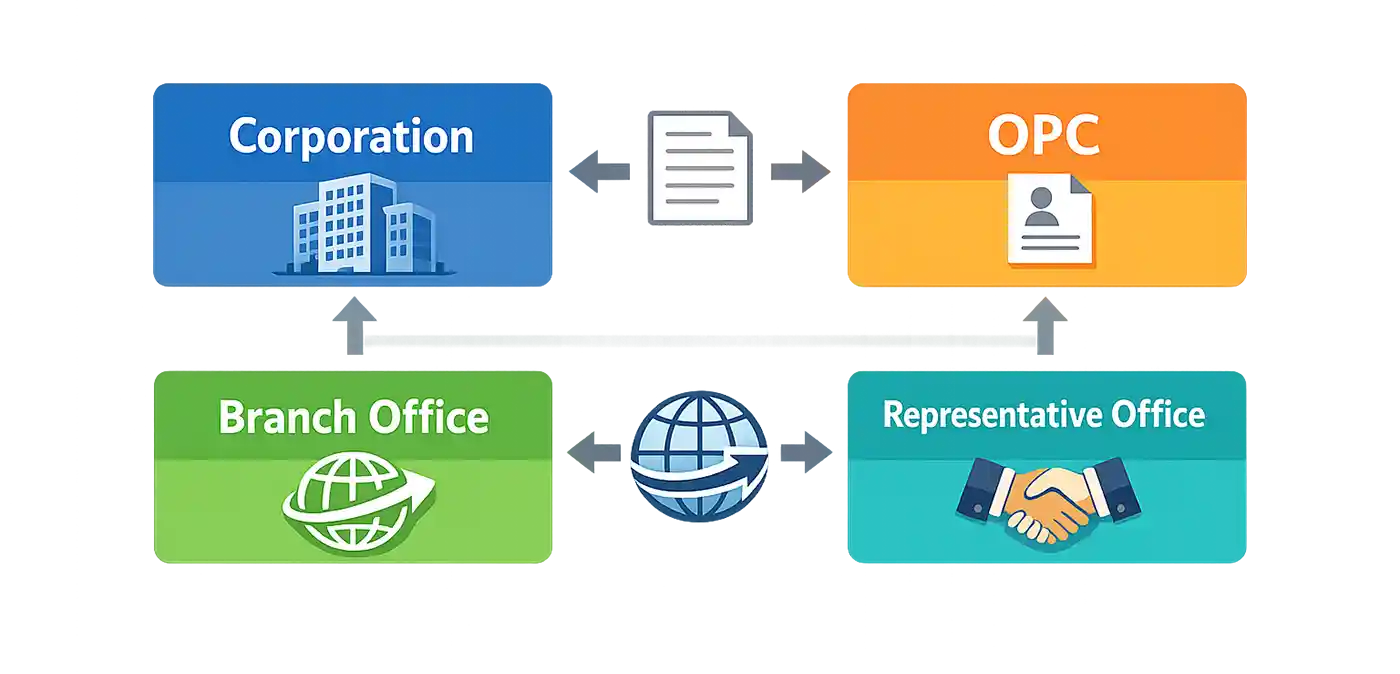
Business Structures Available to Foreigners
1. Domestic Corporation (Most Common)
Key Advantages
- Can legally operate within the Philippines
- Suitable for large-scale business activities
- Can own assets (including land, if compliant with laws)
- Widely recognized by banks and investors
Limitations & Risks
- Must be at least 60% Filipino-owned in restricted industries
- Foreign ownership is often capped at 40%
- Requires local shareholders or partners
- Governance and control must be carefully structured
Reality Check:
Your success will depend heavily on choosing the right Filipino partners.
2. One Person Corporation (OPC)
Key Advantages
- Can be 100% foreign-owned (if the industry allows)
- Single shareholder structure
- Simpler than traditional corporations
Limitations & Risks
- Still subject to foreign ownership restrictions by industry
- Less scalable compared to full corporations
- Requires full compliance with SEC regulations
3. Branch Office
Designed for foreign companies expanding into the Philippines.
Key Advantages
- 100% owned by the parent company
- Full operational control
- No need for local shareholders
Limitations & Risks
- Requires minimum capital (typically USD 200,000 or more)
- Limited to activities of the parent company
- Parent company assumes full liability
4. Representative Office
Key Advantages
- 100% foreign-owned
- Ideal for market research and support functions
- No requirement to generate income locally
Limitations & Risks
- Cannot generate revenue in the Philippines
- Fully dependent on funding from the parent company
Business Limitations Foreigners Must Understand
🚫 Foreign Investment Negative List (FINL)
Certain industries are restricted or partially limited to foreign ownership.
Examples include:
- Mass media
- Small-scale retail
- Land ownership
- Certain professional services
These restrictions are defined under Philippine law and updated periodically.
Blunt Truth:
Not all business ideas are legally viable under full foreign ownership.
🚫 Capital Requirements
Many industries impose minimum paid-up capital requirements.
For example:
Retail businesses may require at least USD 2.5 million for full foreign ownership.
🚫 Bureaucracy & Processing Time
- Multiple government agencies involved
- Registration can take weeks to months
- Extensive documentation and compliance required
Reality:
Speed depends on preparation and proper guidance—not shortcuts.

Step-by-Step: Starting a Business in the Philippines
Step 1. Define Your Business Activity
- Confirm whether your industry allows foreign ownership
Step 2. Choose the Right Structure
- Corporation, OPC, branch office, or representative office
Step 3. Register with SEC or DTI
- Reserve company name
- File Articles of Incorporation
Step 4. Secure Local Permits
- Barangay clearance
- Mayor’s permit
Step 5. Register with the Bureau of Internal Revenue (BIR)
- Obtain tax identification
- Register official receipts and invoicing
Step 6. Open a Corporate Bank Account
- Required for operations and regulatory compliance

Critical Advice for Foreign Investors (No Sugarcoating)
1. Do Not Use Dummy Ownership Structures
- Illegal under Philippine law
- Can result in criminal liability and business closure
2. Choose Partners Carefully
- Conduct proper due diligence
- Clearly define roles, rights, and protections
3. Understand Cultural and Market Dynamics
- Relationship-building is essential
- Trust plays a significant role in business success
4. Prepare for Operational Realities
- Infrastructure gaps in certain regions
- Regulatory changes
- Talent management challenges
Reality:
The Philippines offers high potential—but it is not plug-and-play.

Final Pros & Cons Overview
PROS
- Expanding consumer market
- Young, English-speaking workforce
- Strategic location within ASEAN
- Strong opportunities in real estate, tourism, and digital services
- Lower operating costs compared to Western countries
CONS
- Ownership restrictions in key industries
- Regulatory complexity
- High capital requirements in certain sectors
- Dependence on local partnerships
- Infrastructure inconsistencies

Conclusion
Doing business in the Philippines is not about finding the easiest way in—it’s about finding the right way in.
Foreign investors who succeed are those who:
- Understand the legal landscape
- Respect ownership structures
- Build strong local partnerships
- Commit to long-term value creation
At Genki Realty, we go beyond property.
We help clients build sustainable, compliant, and future-ready business foundations—aligned with both opportunity and law.