Foreigners Buying Real Estate in the Philippines Complete Guide

Introduction
The Philippines is a growing real estate market attracting many foreign investors, retirees, and expats. With its tropical lifestyle, lower property prices compared to Western countries, and strong rental demand in cities like Manila, Cebu, and Davao, it is a popular destination for property investment.
However, foreign ownership in the Philippines has strict legal limits. Understanding what you can legally buy and how the process works is essential before investing.
What Foreigners Can Own in the Philippines
1. Condominium Units
Foreigners can legally own condominium units under Philippine law as long as foreign ownership in the entire project does not exceed 40 percent.
Key points
- You can fully own the condo unit
- You receive a Condominium Certificate of Title
- You can sell, lease, or rent it out
- The building must comply with the 40 percent foreign ownership rule
2. Townhouse or House Structure Without Land Ownership
Foreigners can own the building itself but not the land it sits on.
Key points
- You may own the house structure
- The land must be owned by a Filipino citizen or corporation
- A long term lease agreement is required for the land
3. Long Term Land Lease
Foreigners can lease land but cannot own it.
Key points
- Initial lease up to 50 years
- Renewable for another 25 years
- Common for residential, commercial, or retirement use
- Lease must be registered to be legally binding
4. Ownership Through a Filipino Corporation
Foreigners can indirectly control property through a corporation.
Key points
- Corporation must be at least 60 percent Filipino owned
- Foreigners can own up to 40 percent
- Corporation can own land
- Used for business or large developments


What Foreigners Cannot Own
1. Land Ownership
Foreigners are not allowed to directly own land in the Philippines.
Important notes
- No freehold land ownership
- No rural or agricultural land ownership
- No beach land ownership directly under foreign name
2. Certain Agricultural and Protected Lands
- Agricultural farmland
- Forest reserves
- Protected environmental zones

Legal Exceptions and Special Cases
1. Marriage to a Filipino Citizen
Marriage does not automatically allow land ownership.
Key points
- Land must still be under Filipino spouse name
- Foreign spouse may inherit usage rights but not full ownership
- Property remains subject to Philippine property laws
2. Inheritance
Foreigners can inherit property in some cases but land ownership is still restricted.

Step by Step Process of Buying Property in the Philippines
Step 1. Choose the Property Type
Decide between condo, house and lease, or corporate investment structure.
Step 2. Verify Legal Ownership
Check title status and developer credibility.
- Verify land title authenticity
- Check if condominium is within 40 percent foreign quota
- Confirm no legal disputes
Step 3. Sign Reservation Agreement
- Pay reservation fee
- Property is temporarily held under your name
Step 4. Review Contract to Sell
- Defines payment schedule
- Includes terms and conditions
- Must be reviewed carefully before signing
Step 5. Payment and Transfer Process
- Down payment is made
- Installment or bank financing follows
- Final deed is processed after full payment
Step 6. Issuance of Title or Certificate
- Condominium Certificate of Title for condos
- Lease agreement for land usage
- Corporate documentation if structured via company

Important Tips for Foreign Buyers
1. Always Use a Licensed Broker
Ensure the broker is accredited and registered.
2. Avoid Informal Agreements
Verbal agreements are not legally enforceable.
3. Understand Tax and Fees
- Documentary stamp tax
- Transfer fees
- Notarial fees
- Capital gains tax if selling
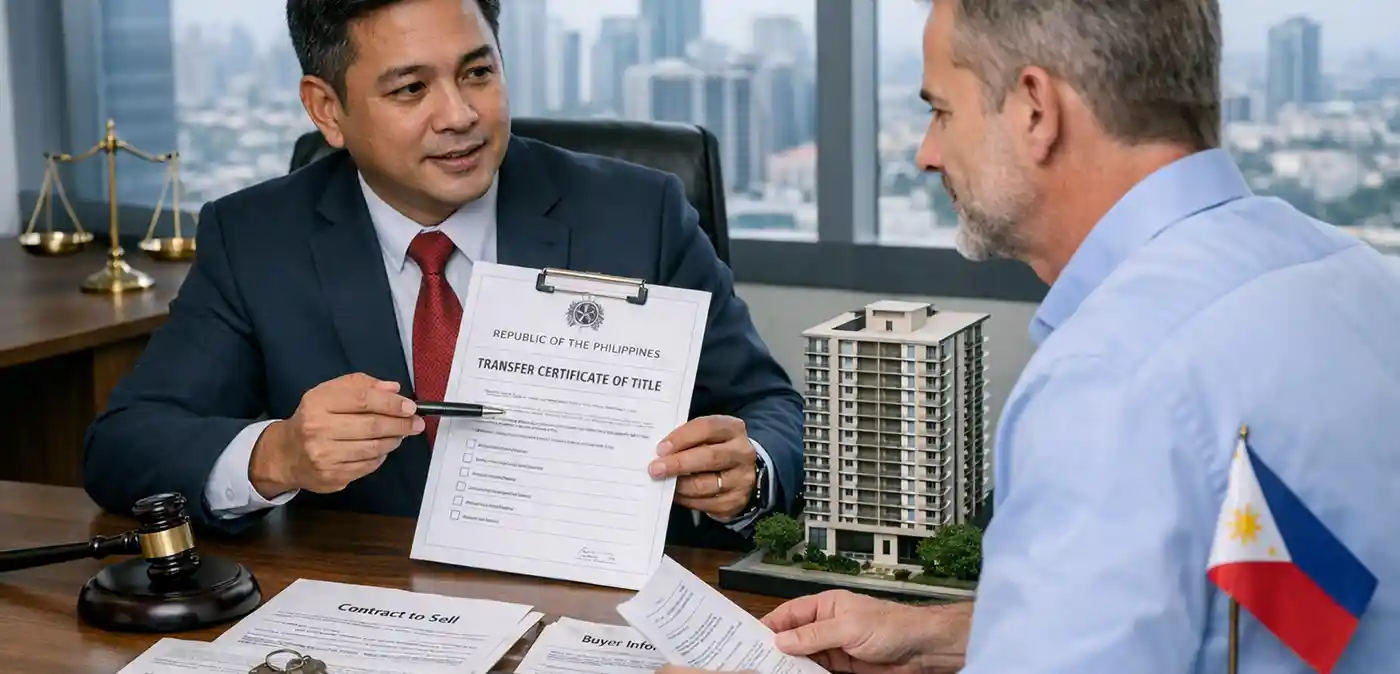
4. Work With a Lawyer
A real estate lawyer ensures legal protection and proper documentation.
Conclusion
Foreigners can invest in Philippine real estate, but ownership is limited mainly to condominium units and long term lease structures. Direct land ownership is restricted, but there are legal pathways to safely invest and enjoy property in the country.
Understanding the rules, verifying documents, and working with professionals are key to a secure and successful investment in the Philippines real estate market.