Visa Options in the Philippines: A Complete Guide for Foreigners (Pros, Cons, and Legal Realities)

Introduction
The Philippines continues to attract foreign retirees, investors, and long-term residents due to its lifestyle appeal, tropical climate, English-speaking population, and relatively low cost of living.
However, before making any property or relocation decision, one critical factor must be clearly understood:
Your visa determines your ability to stay, invest, and build a life in the Philippines.
While many foreigners can enter the country with ease, legally staying long-term requires proper planning and a clear understanding of available options.
This guide provides a comprehensive, no-nonsense breakdown of the main visa pathways, including their advantages, limitations, and real-world considerations.
Main Visa Options for Foreigners
1. Special Resident Retiree’s Visa (SRRV)
Administered by the Philippine Retirement Authority (PRA)
This is the most structured and reliable long-term visa option for retirees.
Key Advantages
- Indefinite stay (no need to exit and re-enter)
- Multiple-entry privileges
- Option to convert deposit into qualified property investment (e.g., condominium)
- Access to banking, healthcare, and utilities
- Stable legal status for long-term residency
Limitations & Risks
- Requires a deposit (USD 10,000–50,000 depending on category)
- Must maintain the required investment or deposit
- Application process can be bureaucratic
- Not intended for active employment
Reality Check
The SRRV remains the most dependable retirement visa—but it requires capital commitment and proper structuring.
2. 9(a) Temporary Visitor Visa (Tourist Visa)
Issued by the Bureau of Immigration
This is the most common entry point—but not a true long-term solution.
Key Advantages
- Easy to obtain for most nationalities
- Initial stay of 30 days
- Extendable up to 36 months (depending on nationality)
- Flexible for short-term stays and exploration
Limitations & Risks
- Requires frequent extensions (time-consuming and costly)
- No right to work
- No long-term residency security
- Costs accumulate over time
Reality Check
Many foreigners begin here, but relying on this visa long-term is inefficient and unstable.
3. Special Investor’s Resident Visa (SIRV)
Designed for foreign investors seeking long-term residency through capital investment.
Key Advantages
- Indefinite stay while investment is maintained
- No need for frequent renewals
- Allows active business involvement
Limitations & Risks
- Minimum investment of USD 75,000
- Investment must be in approved sectors (no direct land ownership)
- More complex compliance requirements
- Less suitable for retirees
Insight
Best suited for entrepreneurs and business-focused investors rather than lifestyle-driven retirees.
4. Balikbayan Privilege
Available to former Filipinos or foreign nationals traveling with Filipino spouses.
Key Advantages
- Visa-free stay for up to one year
- Simple and cost-effective
- Renewable through re-entry
Limitations & Risks
- Not a permanent residency option
- Requires Filipino spouse or heritage qualification
- Limited structure for long-term planning
Reality Check
Useful for temporary stays, but not a standalone long-term solution.


What Your Visa Does NOT Allow (Common Misconceptions)
🚫 Visa ≠ Property Ownership Rights
Even with long-term visas like SRRV or SIRV:
- Foreigners cannot own land
- Property laws remain separate from visa status
A visa grants residency—not ownership rights.
🚫 Visa ≠ Right to Work
Most visas:
- Do not automatically allow employment
- Require separate permits for local work
🚫 Visa ≠ Citizenship
- These visas allow long-term stay
- They do not grant Philippine citizenship

Step-by-Step: Choosing the Right Visa
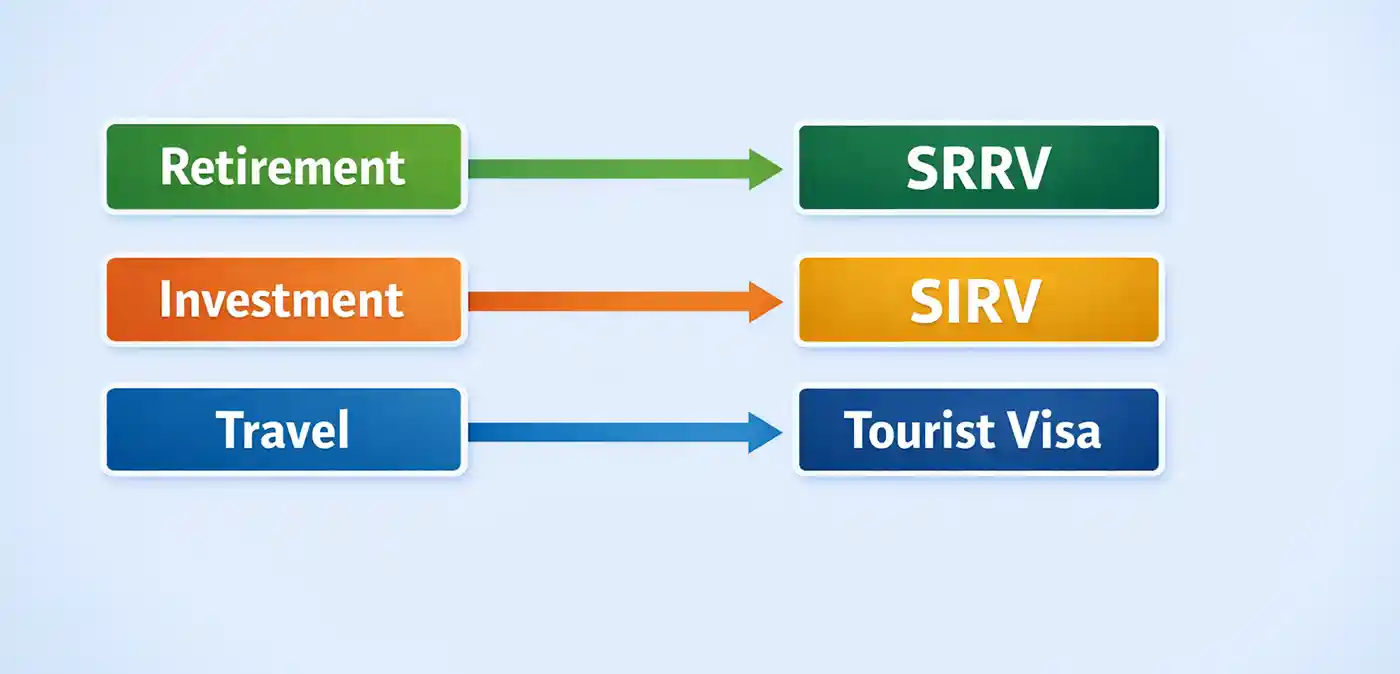
Step 1: Define Your Purpose
- Retirement → SRRV
- Exploration → Tourist Visa
- Investment → SIRV
Step 2: Assess Financial Capacity
- Can you meet required deposits or investment thresholds?
Step 3: Plan a Long-Term Strategy
- Avoid relying on repeated tourist visa extensions
Step 4: Prepare Documentation
- Passport
- Financial proof
- Medical clearance
- Background checks
Step 5: Work with Accredited Agencies
- Avoid unofficial “fixers” or shortcuts
Critical Advice (No Sugarcoating)
1. Avoid Illegal Shortcuts
Using unauthorized agents can result in:
- Blacklisting
- Fines
- Deportation
2. Secure Your Visa Before Buying Property
A common mistake is purchasing property first and resolving visa issues later.
3. Understand Long-Term Costs
- Visa fees
- Renewal costs
- Compliance requirements
Reality: What appears inexpensive initially can become costly without proper planning.
4. Align Visa with Your Lifestyle Goals
- Retirement → stability
- Investment → flexibility
- Short-term stay → mobility

Final Pros & Cons Overview
Pros
- Multiple visa pathways available
- More accessible than many Western countries
- Long-term options (SRRV, SIRV)
- English-speaking environment
Cons
- Bureaucratic processes
- Financial requirements (deposits/investments)
- No direct link to land ownership
- Misuse of tourist visas is common and risky

Conclusion
A visa is not just a travel document—it is your legal foundation for living, investing, and building a life in the Philippines.
Those who succeed are not the ones who rush in, but those who:
- Understand the system
- Choose the right pathway
- Align their visa with long-term goals
At Genki Realty, we guide clients not only in property decisions, but in ensuring their stay in the Philippines is legally secure, strategically planned, and built for the long term.
Official Government Resources (For Verification & Guidance)
To ensure accuracy and avoid misinformation, foreign nationals are strongly encouraged to consult official government agencies:
Philippine Retirement Authority (PRA)
Website: https://pra.gov.ph
Address: 29F Citibank Tower, 8741 Paseo de Roxas, Makati City
Services:
- SRRV processing
- Retirement programs
- Foreign retiree assistance
Bureau of Immigration
Website: https://immigration.gov.ph
Address: Magallanes Drive, Intramuros, Manila
Services:
- Tourist visas (9a)
- Visa extensions and renewals
- Entry/exit regulations
- Immigration compliance